


---------------(Lượt truy cập: 126)---------------
After graduating from the Vietnam National University of Agriculture, Mr. Phan Trung Kiên worked as a salesperson for various companies but met with little success. Driven by a desire for a better life, the engineer—who hailed from a poor rural area on the outskirts of Hanoi—embarked on an entrepreneurial venture to produce probiotics for livestock, though that attempt also failed.
In 2015, he reconnected with a university senior who asked, "See if there"s any work for me; I"m sick of marketing pesticides—it harms both me and the people around me." Kiên rented land with the intention of growing wild vegetables, but after surveying the site, the two men realized the venture wouldn"t be viable.
It was then that he recalled how, whenever he was drunk, his mother would brew *Solanum procumbens* (known locally as *cà gai leo*) to detoxify his liver. Upon researching the plant, he discovered it was a medicinal herb highly beneficial for liver health and one that had been extensively studied by the National Institute of Medicinal Materials.
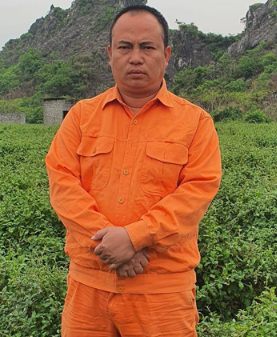
After several failed startup attempts, Mr. Kien is now generating monthly revenue in the billions of dong.
Acting on his idea, he borrowed several billion dong to lease over 20 hectares of land for cultivating *Cà gai leo* (Solanum hainanense). When he began planting, the market price for the herb stood at 150,000 VND per kilogram. He secretly hoped to make a fortune, but reality had other plans; by the time he had planted more than half the leased land, the price had plummeted to 15,000 VND per kilogram.
Unwilling to rely on purchasing agents from pharmaceutical companies due to the low prices, he sought to export the herb to China and India but was unsuccessful.
Left with no other option, he turned to retail sales. Unexpectedly, because he had openly shared his cultivation and care methods throughout the process, people trusted him and proactively placed orders. As they experienced the herb"s effectiveness, they continued to support him and referred other customers. Consequently, he was able to sell several tons of dried *Cà gai leo* each month. Beyond selling the raw product, he also processed it into convenient tea bags for consumers.
"The early days of the startup were truly arduous, yet I never considered abandoning the path I had chosen. I kept thinking that I had already invested so much money—if I didn"t see it through, I"d be finished," he confided.
After nearly a year, he established his own company. Guided by the philosophy of building customer trust before seeking profit, he borrowed capital to invest heavily in facilities, machinery, and equipment to enhance quality. However, the company"s sales were significantly impacted by the complex developments of the COVID-19 pandemic in the country.

Currently, he is still facing difficulties in selling his products.
Despite the challenges, he never lost heart, constantly motivating himself to persevere and move forward. To date, he has expanded his *Ca gai leo* cultivation area to 100 hectares, yielding 800–1,000 tons of dried raw material annually—supplies used both for producing tea and as ingredients for pharmaceutical manufacturers. He currently manages a direct workforce of approximately 70 employees and generates thousands of jobs for local farmers in the cultivation regions.
The company"s *Ca gai leo* product line includes dried *Ca gai leo*, tea bags, concentrated extract, and capsules. Notably, the *Ca gai leo* tea bags have achieved OCOP 4-star certification.
He currently sells the product at 280,000 VND per kilogram.
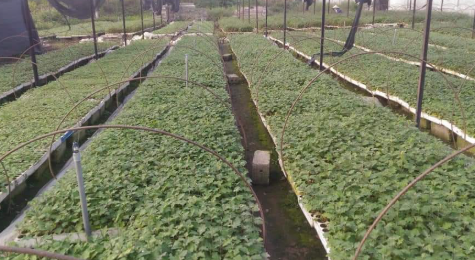
He continues to dedicate time to learning and remains steadfast in cultivating *Solanum hainanense* (cà gai leo) without the use of plant protection chemicals.
Regarding the company"s products, he noted that after having samples tested, he discovered that extensive processing diminishes the plant"s medicinal properties; therefore, it is best consumed fresh or brewed as a tea.
Consequently, he consistently advises customers to consume it as a tea, as it is both affordable and beneficial. This practice fosters a habit of frequent hydration—drinking small amounts regularly—which keeps the body"s internal systems flowing like a river, thereby enhancing the absorption of medicinal compounds and facilitating more thorough toxin elimination.
These products generate monthly revenues reaching billions of dong for his company.
Looking ahead, he remains steadfast in his commitment to a chemical-free approach, ensuring that no synthetic drugs or preservatives are used in his *Cà gai leo* products.
*Cà gai leo* (scientific name: *Solanum procumbens*) is known by various local names, such as *cà gai dây*, *cà vạnh*, *cà quýnh*, *cà lù*, *cà bò*, *cà Hải Nam*, *cà quạnh*, *quánh*, and *gai cườm*. Its distribution range extends from Vietnam"s northern provinces down to Hue, as well as into Laos, Cambodia, and China (Guangdong, Guangxi, and Hainan).
It is a scrambling shrub with stems ranging from 60 to 100 cm or more in length, featuring multiple branches. The plant is heavily armed with thorns and has a spreading habit. Its leaves are egg-shaped or elongated, with bases that are either axe-shaped or slightly rounded. Flowering occurs from April to September, with fruiting taking place between September and December. The fruit is a glossy, spherical red berry, 7–9 mm in diameter. The seeds are pale yellow, disc-shaped with a kidney-like contour, and measure approximately 3 x 2 mm. The plant has a slightly pungent taste and warming properties.
According to numerous studies, this species is considered the most effective traditional Vietnamese medicinal plant for liver detoxification available today.
Other Posts
- State Bank lowers central exchange rate following record rise. (21.08.2026)
- Why is the USD exchange rate plummeting? (21.08.2026)